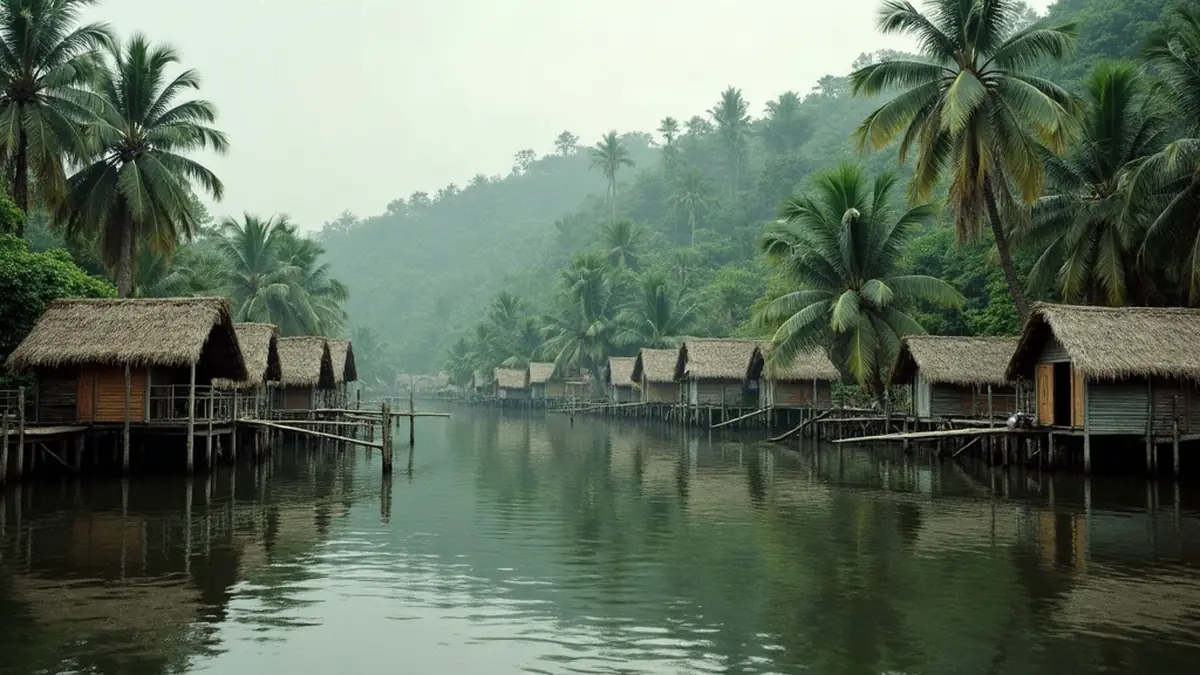
A Mentawai traditional village tour follows the Rereiket river upstream from Muara Siberut through south Siberut villages such as Madobag, Ugai, Butui and Matotonan, combining time in the riverside settlements built under government programmes with visits to forest uma where clans keep older ways. Plan four to seven days from Padang, with buffer for ferries.
Many travellers imagine the Mentawai living only in remote longhouses deep in the forest. The reality on Siberut is more layered and, for a curious visitor, more interesting. Most families live in villages along the rivers, with a church, a primary school and rows of wooden houses, while some clans still keep an uma in the forest and move between the two. A Mentawai traditional village tour shows you both, and helps you understand how they connect. This page covers the route, the villages, what you will see in each type of settlement, practicalities such as power and phone signal, and how to choose an itinerary. For the broader picture, see our guide to mentawai island tours.
We are an independent planning guide. We do not run boats or homestays; we help you plan and connect with established local guides on Siberut.
Why Mentawai villages look the way they do
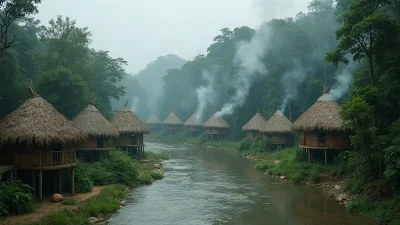
Traditionally, Mentawai clans lived in dispersed settlements around an uma, the communal longhouse that is both home and ritual centre. In 1954 the Indonesian government banned Arat Sabulungan, the traditional belief system, and in the decades that followed, resettlement programmes pressed families to move from the forest interior into organised villages, a policy that continued into the 1970s. Ritual objects were sometimes destroyed. The result is the landscape you travel through today: linear riverside or roadside villages with individual family houses and public buildings, and, further inland, clearings with an uma surrounded by gardens and secondary forest.
The two worlds are not separate. A family may keep a house in the village for school and church and return to the clan uma for ceremonies, sago work or longer periods. A good guide will explain whose land you are on and why a household lives where it does. Our article on the uma and the Mentawai clan gives the background.
Villages on the Rereiket route
All four villages below are in the Siberut Selatan (South Siberut) district. Boat times are approximate and depend on tide, water level, load and stops.
| Village | Approx. time upriver from the Muara Siberut area | Character | Notes for visitors |
|---|---|---|---|
| Madobag (Madobak) | About 3 hours by motorised canoe | Larger village, listed as a tourism village on Indonesia’s national tourism-village portal | Common first stop; the Kulukubuk waterfall is in this area |
| Ugai | About 4 hours | Smaller riverside village | Often visited en route to uma further inland |
| Butui | About 5 hours | A hamlet administered within Madobag | Known in cultural reporting for tattoo tradition |
| Matotonan | About 5–6 hours, roughly 40 km | Usually the farthest village on the common route; also a listed tourism village | Strong associations with sikerei and titi culture |
Spellings change between maps and guidebooks: Rereiket, Sarereiket and Rereget refer to the same river area. A Trans-Mentawai road has been planned and partly built on Siberut, passing places such as Rogdog, Madobag and Matotonan, so some trips now combine motorbike or vehicle sections with the river, depending on conditions and the state of the road.
Which villages you include should depend on what you want from the trip rather than on ticking off names. Madobag is the easiest to reach and has the most experience hosting visitors. Ugai is quieter. Butui and Matotonan reward the extra river hours with a stronger sense of distance from the coast, and both are linked in cultural reporting with tattoo and sikerei traditions. If your time is short, it is better to spend it well in one area than to rush between four.
What you see on a Mentawai traditional village experience
In the riverside village
Mornings are busy: children in uniforms heading to school, canoes loaded with bananas and sago, women washing at the river. You may visit the village head to introduce yourself, which is both courtesy and practicality. Villages are good places to see everyday modern Mentawai life, buy a coconut, and watch canoe building or repairs.
In the forest uma
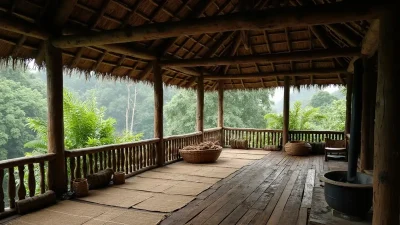
A walk of anywhere from twenty minutes to several hours takes you to clan clearings. Here the pace slows. Pig pens sit under the raised floor, skulls of hunted animals hang from the rafters as a record of the clan’s relationship with the forest, and sikerei may wear traditional dress daily. Most traditional village tours include at least one or two nights here. For a longer immersion, see our page on the Mentawai tribe experience.
On the river between them
The river is the road. Hours in a pompong, the long motorised dugout, are part of the tour, not dead time. You will pass people bathing, fishing and ferrying goods. Our article on river life and canoe travel in Siberut explains how it works.
Practicalities: power, signal and festivals
- Electricity: village centres may have some power from the grid or a generator, often not around the clock. Forest uma usually have none. Bring a power bank and a headlamp.
- Phone signal: intermittent, strongest near village centres and absent along much of the river and in the forest. Do not rely on mobile data for navigation or emergencies.
- Sundays: many villagers attend church; travel and work may be quieter.
- Festivals: the regional Festival Pesona Mentawai is held on varying dates and locations, so check the Mentawai Islands government calendar for the year. Uma ceremonies are private clan events, attended only by invitation.
Choosing your village tour itinerary
- 4 days / 3 nights: Madobag area, Kulukubuk waterfall, one or two nights in an uma nearby.
- 5–6 days: Madobag, Ugai and a longer uma stay, with one moderate trekking day.
- 7 days or more: continue to Butui or Matotonan, with time in two different clan settlements.
All itineraries are examples, not fixed packages; your guide will adjust to the ferry timetable and river conditions.
How long should a village visit be?
The answer depends on whether you want to see a village or spend time with a family. Because the ferry runs only a few days a week, the minimum is shaped by the boat as much as by your interest.
| Length | What fits in | Who it suits |
|---|---|---|
| Day visit from Muara Siberut | One riverside village, a walk and a conversation through your guide | Travellers with a surf or work schedule and very little time |
| 2–3 nights | A village plus one night in a nearby forest uma | First visits with a fixed ferry window |
| 4–6 nights | Two or three villages on the Rereiket route and slower days in an uma | People who want to join daily work rather than observe it |
Common mistakes on a first village visit
- Treating the village as the “traditional” part. Riverside villages are where people shop, school and worship. The older way of life is more visible in the uma, so plan at least one night there.
- Arriving without a contact. Turning up unannounced puts the village head in an awkward position. Your guide should send word ahead.
- Photographing before greeting. Greet, sit and talk first; ask before lifting a camera, and accept a no.
- Handing out sweets or money to children. It creates begging and undermines parents. Give practical gifts to the host family through your guide instead.
- Rushing. Village life has a slow rhythm. Plans change because of rain, a funeral or a ceremony, and a good visit makes room for that.
Quick facts
- Area: Siberut Selatan district, along the Rereiket / Sarereiket river
- Gateway: fast ferry Padang to Maileppet (about 4 hours direct), then motorised canoe
- Main villages: Madobag, Ugai, Butui, Matotonan
- Typical length: 4–7 days from Padang
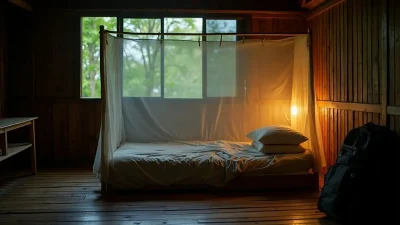
- Accommodation: village homestay or uma floor, with mosquito net
Frequently asked questions
Are the villages still traditional?
The riverside villages are modern Mentawai settlements, shaped by resettlement history. Traditional architecture and ritual life are found mainly in forest uma nearby. A village tour shows both sides honestly.
Do I need permission to enter a village?
Your guide will introduce you to the village head and the host clan. Never wander into a clan’s uma uninvited.
Can I visit several villages in one trip?
Yes, but each extra village usually adds river time. Four to seven days lets you see two or three without rushing.
Is there anywhere to buy supplies?
Small shops in Muara Siberut and larger villages sell basics. Buy what you need, including gifts for host families, before heading upriver.
Can families with children do a village tour?
Yes. Village-based itineraries involve less walking than deep treks and suit families with children used to heat and simple conditions.
What gifts should I bring to a Mentawai village?
Ask your guide, who will know what the host family needs. Common practical gifts are rice, sugar, coffee, cooking oil or school supplies bought in Muara Siberut. Tobacco is traditional in some households but is not obligatory, and gifts should never replace the agreed payment.
Plan your Mentawai traditional village tour
Tell us how many days you have and which villages interest you, and we will help you shape a Mentawai traditional village tour and connect you with established local guides on Siberut. Message us on WhatsApp or email bd@juaraholding.com.