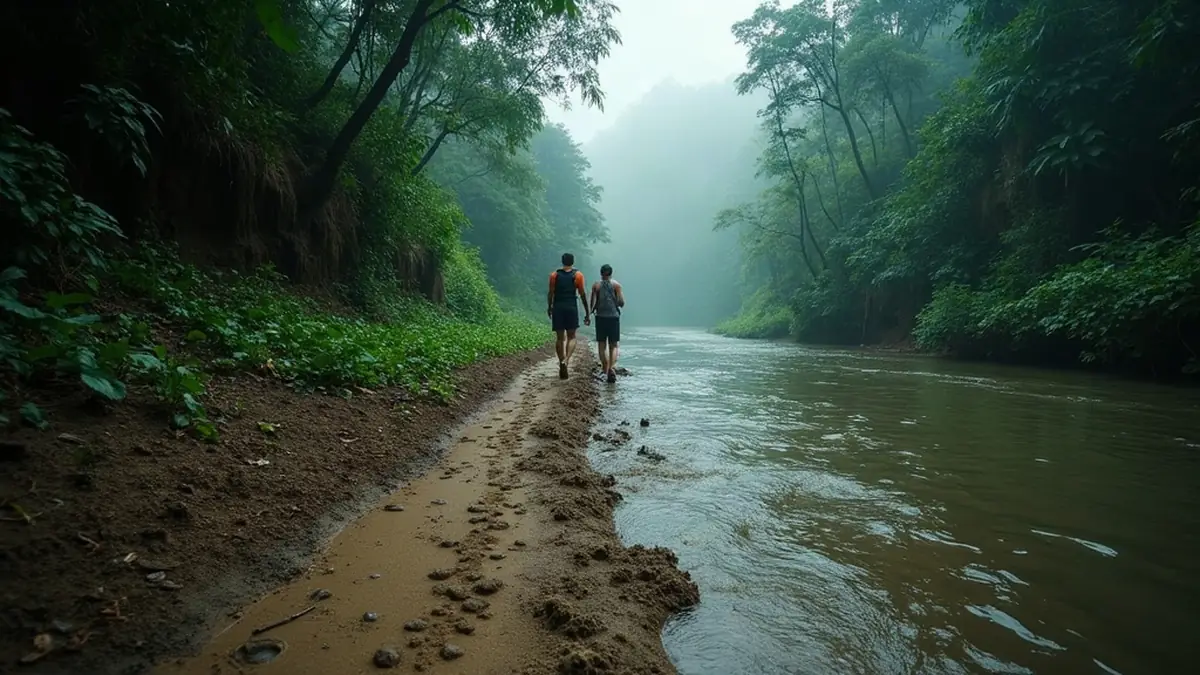
Mentawai trekking means walking between river villages and clan longhouses in the interior of Siberut, the largest Mentawai island. Most treks start in Muara Siberut, go upriver by motor canoe to villages such as Madobag, Ugai or Matotonan, and last three to nine days. Trails are muddy, unmarked and crossed by streams, so a local guide is essential.
Mentawai trekking is different from hiking in most of Southeast Asia. There are no summits, no viewpoints at the end of a switchback and no signposted national trail. You walk through lowland rainforest and old garden land, along paths that families use to reach their sago groves, taro swamps and the uma (clan longhouse) of their relatives. The reward is time with people, not altitude. This guide covers where treks go, how long they take, what the ground is like, when to go and how the logistics fit together, so you can decide what kind of trip suits you before you contact anyone.
Where Mentawai trekking happens
Almost all cultural trekking in the Mentawai Islands takes place on Siberut. The southern islands (Sipora and North and South Pagai) are better known for surf and have fewer traditional longhouses still in use. On Siberut, the established trekking area is the south-central interior along the Rereiket river system (also spelled Sarereiket). Parts of the island fall inside Siberut National Park, which covers roughly 190,500 hectares and was recognised as a UNESCO Biosphere Reserve in 1981.
The villages you hear about most are:
- Madobag, usually the first inland stop, with river access and short forest walks to nearby uma.
- Ugai, farther upriver and commonly combined with Madobag on shorter trips.
- Butui, often part of longer routes between Ugai and Matotonan.
- Matotonan, more remote, reached by continuing upriver and then walking between settlements.
The real destinations are the uma scattered in the forest around these villages. Since the 1970s many families were moved into government-built settlements, so a trek often means walking out of a village to a longhouse where an extended family still lives, keeps pigs and holds ceremonies.
How a Mentawai trekking trip is structured
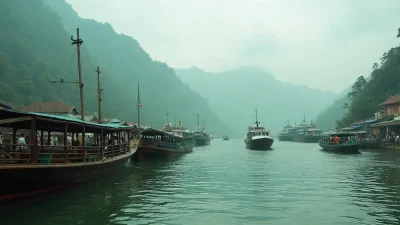
Nearly every itinerary follows the same pattern. You cross from Padang on the Sumatran mainland to Muara Siberut by ferry, spend a short time in town while your guide buys supplies, then travel upriver by pompong (a long motorised canoe). Reported river times are roughly three hours to Madobag, around four to Ugai and five to six to Matotonan, but water level, load and weather change that a lot. Some routes add a short road transfer first. From the river landing you walk.
Days on the trail are rarely long. A typical walking stage is two to four hours, but after overnight rain the same stage can take much longer. The rest of the day is spent at the uma: helping process sago, watching arrows being made, bathing in the river, eating with the family and sleeping on the longhouse floor under a mosquito net.
| Trip length | Typical route | Walking per day | Who it suits |
|---|---|---|---|
| 3 to 4 days | Madobag or Ugai and one nearby uma | 1 to 3 hours | First-timers, tight schedules |
| 5 to 7 days | Two or three uma, Madobag to Ugai or Butui | 2 to 4 hours | Most travelers with average fitness |
| 8 to 10 days | Deeper interior, often towards Matotonan | 3 to 5 hours, some longer | Experienced walkers, photographers, return visitors |
These ranges are indicative. Operators design routes differently, and the travel days to and from Padang are often counted inside the total. If you are weighing a short trip against a long one, our comparison of Mentawai trekking tours by route and length lays out the trade-offs in more detail.
Terrain: what the ground is actually like
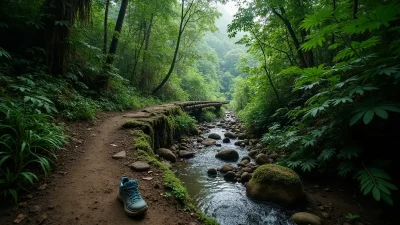
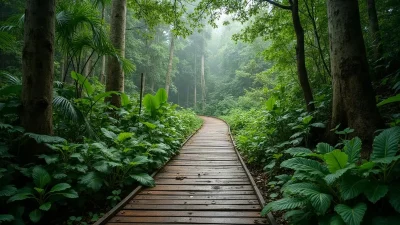
Expect mud. Siberut is lowland rainforest with very high rainfall, and the paths are packed earth, roots and leaf litter that turn slick within minutes of a shower. In places you sink to the shin. You will cross streams on foot and walk over single logs laid across channels, which are the part most people find hardest. The elevation changes are small, but short steep ridges between valleys are common and can be tiring in humidity.
Leeches appear after rain, insects are constant and the heat does not ease much at night. None of this is technical, but it is tiring in a steady way. The difficulty table further down this page, and our guide to what to expect on a Mentawai rainforest trek, go deeper into fitness, footwear and pace.
When to go Mentawai trekking
It rains on Siberut in every month. A “dry season” here means relatively drier, not dry. Monthly rainfall data from regional summaries points to the wettest period around September to December, with October and November usually the heaviest. May to August tends to be somewhat drier, and many travelers prefer roughly April to October partly because sea crossings are often calmer. Sources disagree on the exact boundaries, so plan for rain whenever you go.
| Period | Trail conditions | Sea crossing | Notes |
|---|---|---|---|
| May to August | Relatively drier, still muddy | Often more settled | Popular period, also the main surf season in the south |
| September to December | Wettest, more flooding, more leeches | Rougher spells possible | Rivers run high, which can help or hinder boat travel |
| January to April | Mixed, heavy showers | Variable | Quieter months, fewer visitors |
Do you need a guide and a permit?
Yes to the guide, in practice. Paths are not mapped or marked as a trail network, and the uma you visit are private homes. A local guide arranges the boat, knows which families are happy to host, translates, negotiates food and handles the etiquette that makes a visit welcome rather than intrusive. Walking in alone is not realistic or respectful.
Permit requirements for entering forest areas and the national park have changed over the years. Some sources report that permits are needed for certain treks. Confirm current requirements with your guide or operator before you travel rather than relying on older blog posts.
What to bring
Pack light, because you carry it through mud and in and out of canoes. Essentials include quick-drying clothes, a long-sleeved shirt for evenings, grippy shoes or trail sandals that can get soaked, a dry bag, a headlamp, insect repellent, a personal first-aid kit and any prescription medication. Our Mentawai trek packing list has the full checklist, including small gifts that hosts appreciate.
How hard is Mentawai rainforest trekking?
Distances are modest; conditions are not. Typical trekking days on Siberut last three to five hours of walking, and deeper forest days can run longer. What makes them tiring is slick clay, roots, log bridges, river crossings and humidity that rarely drops below about 80 percent. The table below is a rough guide to how different travellers usually find it.
| Traveller | Usual experience | Suggested format |
|---|---|---|
| Regular hiker, good balance | Hard but enjoyable; the mud is the main surprise | 5–7 days with two or more trekking days |
| Fit but new to jungle walking | Manageable at a slow pace with a walking stick | 4–5 days, river approach, one longer walk |
| Limited fitness or knee problems | Log bridges and steep slippery banks are the hardest part | 3–4 days based near the river |
| Families with older children | Fine if children like mud and insects | Short walks between villages and a nearby uma |
Rainfall by month on Siberut
There is no dry season on Siberut, only less wet months. Published climate figures vary between sources, but one commonly cited dataset gives the following monthly rainfall. Treat it as a guide to relative wetness, not a forecast.
| Month | Approximate rainfall | Trekking note |
|---|---|---|
| January | about 276 mm | Wet; rivers can rise quickly |
| February | about 220 mm | Among the less wet months |
| June–July | about 220 mm each | Popular, still with regular rain |
| September | about 329 mm | Getting wetter |
| October–November | about 390–410 mm | Wettest period; expect delays |
| December | about 343 mm | Wet; holiday ferries busier |
Whatever the month, build in a spare day: heavy rain overnight can turn a four-hour walk into a short day, and the ferry back to Padang does not wait.
Quick facts
- Where: Siberut island, mainly the Rereiket river area in the south-central interior
- Gateway: Padang (Sumatra) to Muara Siberut by ferry, then upriver by motor canoe
- Typical length: 3 to 10 days including river travel
- Daily walking: usually 2 to 4 hours, longer after rain
- Accommodation: uma longhouses and village homes, sleeping on the floor
- Guide: essential; permits should be confirmed locally
- Rain: year-round, heaviest around October and November
Frequently asked questions
How hard is Mentawai trekking?
It is moderate rather than extreme. There is no altitude and walking stages are short, but mud, heat, log crossings and humidity make it tiring. Anyone who can walk three hours on uneven ground can usually manage a shorter route. We cover this in detail in our guide on whether Mentawai trekking is suitable for beginners.
How many days do I need?
Five to seven days is the most common choice. It allows the ferry crossing, the river trip and at least two nights in an uma without rushing. Three or four days works if your time is limited, though more of it is spent in transit.
Is Mentawai trekking the same as jungle trekking in Borneo or Sumatra?
Not really. There are no orangutans, and the emphasis is cultural. You walk to meet families who still live around the uma, and the forest is the setting rather than the main event. Siberut does have four endemic primates, which you may hear more often than see.
Where do you sleep on a trek?
Usually on the wooden floor of an uma or a family house, on a thin mat under a mosquito net. Facilities are basic. Washing is in the river and toilets, where they exist, are simple.
Can I combine trekking with surfing?
Yes. Some travelers spend part of the trip in Siberut’s interior and part at a surf camp or on a charter. It needs careful planning around boat schedules, so allow buffer days.
Which months are wettest for Mentawai trekking?
October and November are usually the wettest months on Siberut, with December and September close behind. February and the middle of the year tend to be less wet, but rain is possible every week of the year.
Plan your Mentawai trek
We are an independent planning guide to Mentawai island tours, and we help travelers match their dates, fitness and interests with local Siberut guides and operators. Tell us how many days you have and what you want from the trip on WhatsApp at +62 811 3941 4563 or email bd@juaraholding.com, and we will help you sort out a realistic route.