The Mentawai turuk dance, often called turuk laggai, is a traditional dance in which performers imitate animals such as the Kloss’s gibbon and the sea eagle, stamping to the beat of log drums. It is performed during punen ceremonies, at healing rites led by sikerei, and today also as a cultural presentation for guests.
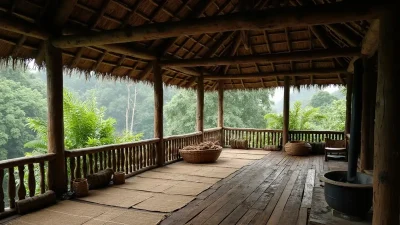
The Mentawai turuk dance is one of the most vivid parts of life in a Siberut uma, the communal longhouse of a clan. Barefoot dancers, often sikerei (ritual healers) dressed in loincloths, beads and flowers, circle the wooden floor while drums hammer out a rhythm and the whole house shakes with stamping feet. Their movements copy birds and primates of the forest. For visitors it can be the most memorable evening of a trip. It also helps to understand what you are watching, because the same steps can mean entertainment in one setting and serious ritual in another.
What the Mentawai turuk dance is
Turuk, also written turuk laggai or turuk lagai, is a dance built on imitation of animal movement. The imitation itself is called uliat. Ethnomusicological research on Mentawai music by Juniator Tulius and Linda Burman-Hall describes named forms such as uliat bilou, which imitates the Kloss’s gibbon, and uliat manyang, which imitates a sea eagle. Other dances and songs depict monkeys, birds and forest creatures. Dancers capture a gibbon’s swing, a bird’s wing beat or a monkey’s alert crouch with small, precise gestures and powerful foot work.
Turuk is strongly associated with the sikerei, but other men, and in some communities women, also take part in group dances. Variants exist, including turuk pokpok, which involves clapping.
The music behind the dance
The rhythm comes mainly from the gajeuma (also called kateuba), a hand drum made from a hollowed log covered with skin. Several drummers sit together and play interlocking patterns. The tuddukat, a set of large wooden slit drums, is another Mentawai instrument mentioned in some accounts. The dancers’ stamping on the raised floor of the uma adds a deep percussive layer, and chanting may accompany the drums. Instruments and names vary between communities, so you may hear different terms in different valleys.
When turuk is performed
Turuk belongs mostly to punen, the ceremonial gatherings when a clan comes together at its uma. Punen mark events such as the building or renewal of an uma, healing, the welcome of new members, or other moments that need the attention of ancestors and spirits. During these times, dancing can last late into the night.
| Context | Who dances | What it means | Can visitors attend? |
|---|---|---|---|
| Punen at a clan uma | Sikerei and clan members | Community ritual, ancestors and spirits | Only if invited by the family |
| Healing ceremony | Sikerei, sometimes in trance | Mediation between patient, spirits and nature | Rarely; depends entirely on the family |
| Evening dance for guests | Sikerei or family members | Hospitality and cultural sharing | Yes, when arranged by a guide with the hosts |
| Regional festival stage | Village dance groups | Cultural presentation | Yes, open to the public when held |
A note on terms
Sources do not use the words in the same way. One ethnographic account treats turuk as primarily an entertainment dance and keeps the term mulajo or lajo for the specifically shamanic dance. Many contemporary Indonesian writers use turuk laggai for the broader ritual practice. If your guide uses a different name, that is not an error. It reflects real local variation.
The sikerei and the healing dance
The sikerei are ritual specialists who heal, lead ceremonies and communicate with spirits under Arat Sabulungan, the traditional belief system. In healing rites, dance, chanting and rhythm help them reach the spirit world on behalf of a sick person. Some sikerei enter trance. Animal imitations are not decoration in this setting. They are part of a conversation between people, ancestors and the living forest.
Because these rites concern illness and family matters, they are not shows. A guide may explain one that is happening nearby, but the family decides whether outsiders can watch. Our article on what really happens on a sikerei shaman visit covers this in more detail.
Seeing a turuk dance on Siberut
Most visitors see turuk during a stay in an uma in the Rereiket river area of South Siberut, around villages such as Madobag, Ugai, Butui and Matotonan. In many cases a host family offers an evening dance when guests stay with them. Some hosts expect a contribution, such as a pig or food for the gathering, and a good guide will explain what is customary and fair.
- Do not expect a fixed schedule. Ceremonies follow family and community needs, not tour calendars. Anyone guaranteeing a “ritual” on a set date is probably staging it.
- Ask before filming. Recording a dance for guests is often welcome. Recording a healing rite may not be.
- Join only when invited. Hosts sometimes pull guests into a dance. Accept with good humour, but do not jump in uninvited.
- Stay for the whole thing. Leaving early, or wandering off to check your phone, is noticed.
- Festivals are separate. The regional Festival Pesona Mentawai has included dance performances, but its dates and venue change by year, so check the regency calendar if you hope to coincide with it.
If seeing ceremonial life is a priority, choose a longer stay in one uma over a rushed tour of several villages. The Mentawai tribe tour page compares trip lengths and what each allows, and our Mentawai traditional village tour page explains how the main river villages differ.
Quick facts
- Names: turuk, turuk laggai, turuk lagai; animal imitation is called uliat
- Animals imitated: Kloss’s gibbon (bilou), sea eagle, monkeys and other forest birds and animals
- Instruments: gajeuma or kateuba hand drums, tuddukat slit drums in some accounts, foot stamping
- Occasions: punen ceremonies, healing rites, guest evenings, festival stages
- Main dancers: sikerei, with other clan members joining
- Where: clan uma in South Siberut, especially the Rereiket river area
Frequently asked questions
Is the turuk dance religious?
It can be. In punen and healing rites it has a ritual role linked to Arat Sabulungan. In other settings it is a social or cultural performance. The context tells you which.
Which animals does the Mentawai turuk dance imitate?
Documented forms include the Kloss’s gibbon (uliat bilou) and the sea eagle (uliat manyang). Dances also depict monkeys, birds and other forest animals, and repertoires vary by community.
Can women dance turuk?
Sikerei, who are usually men, are most associated with the dance. Women take part in some communities and some dance forms. Practice differs between clans.
Can I see a turuk dance on a short trip?
Sometimes. A host family may offer an evening dance during a two- or three-night stay. It is never guaranteed, and longer stays give more chance of seeing genuine ceremonial life.
Should I pay to watch?
Payment is usually handled through your guide as part of hosting costs, sometimes including food or a pig for the gathering. Avoid handing cash directly to dancers unless your guide advises it.
Plan a visit with time for ceremony
We are an independent planning guide to Mentawai tourism, helping travelers connect with local Siberut guides and operators who work with host families. Message us on WhatsApp at +62 811 3941 4563 or email bd@juaraholding.com and tell us how many days you have. We will help you plan a stay long enough to experience uma life properly.