Mentawai bow and arrow hunting uses palm-wood bows and arrows tipped with a plant poison made from ingredients such as Derris root and chili. Hunters on Siberut traditionally target wild pig, deer and some monkeys, follow strict taboos, and share the meat with the clan. Hunting protected primates is now restricted inside Siberut National Park.
Mentawai bow and arrow hunting is one of the skills that visitors to a Siberut uma most often see in action, usually as arrow-making on the longhouse veranda or a short walk with a hunter into the surrounding forest. It is not a sport. For families in the interior it has long been a source of food, a test of skill and a matter governed by spiritual rules. It is also an area where tradition, conservation law and tourism meet, so it helps to understand all three before you go.
The tools of Mentawai bow and arrow hunting
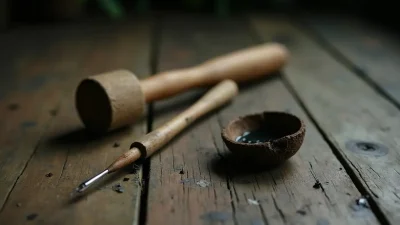
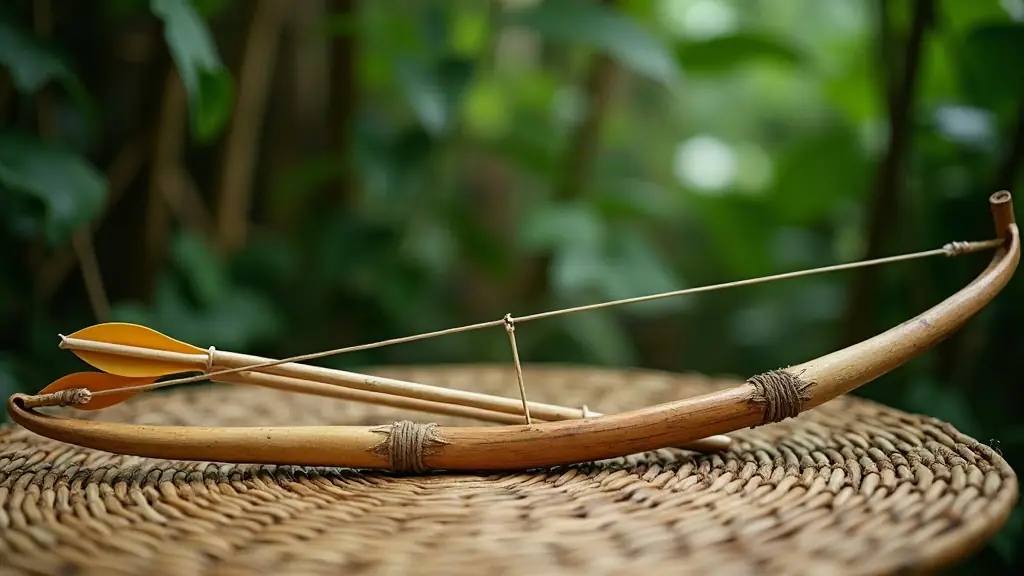
Bows are carved from hard palm wood and strung with plant fibre. Arrows are made from the stems of the nibung palm and other light woods, with tips shaped from wood or metal. Different tips suit different prey. Arrows are often decorated and stored carefully in the uma, because a well-made arrow represents hours of work.
Standard Mentawai names for the bow and arrow are not consistently recorded in the sources we checked, and terms differ between dialects, so we have not listed them here. Your guide or host can tell you the words used in their valley.
How the arrow poison is made
The poison is what makes a small arrow effective against a large animal. Ethnographic and field sources describe a mixture that may include:
- Laingi or laining (Derris elliptica), a root also used across Southeast Asia as a fish poison;
- Daggi or raggi (Tabernaemontana species), a plant with toxic sap;
- Daro, chili (Capsicum frutescens).
The ingredients are pounded and mixed, then the paste is applied to the arrow tips and left to dry. Proportions and methods vary from one hunter and community to another, and many details are kept within families. Preparation is often surrounded by rules: some accounts describe hunters abstaining from sex, sour foods or hair oil while making poison or before a hunt, because breaking these rules is believed to cause failure or accidents.
What is hunted, and how
Traditional quarry on Siberut includes wild pig, deer and several kinds of monkey. Hunts may be done alone, in pairs or as a group with dogs, and important ones can be preceded by a request to the forest spirits, since Arat Sabulungan holds that animals and the forest have souls that must be treated with respect. Skulls of hunted animals are often hung in the uma as a record and as part of keeping good relations with the spirits of the forest.
The Kloss’s gibbon, called bilou, has a special place. Several sources report that hunting it is traditionally taboo or discouraged in many communities. Other primates, such as the Siberut macaque (bokkoi), the Mentawai langur (joja) and the pig-tailed langur (simakobu), have been hunted in the past.
| Animal | Local name | Traditional status | Conservation note |
|---|---|---|---|
| Wild pig | varies by dialect | Hunted; also raised domestically | Main game animal |
| Deer | varies by dialect | Hunted | Less common than pig |
| Kloss’s gibbon | bilou | Often taboo | Endemic and endangered; protected |
| Pig-tailed langur | simakobu | Hunted in the past | Critically endangered; hunting ban reported |
| Mentawai langur | joja | Hunted in the past | Endemic; threatened |
| Siberut macaque | bokkoi | Hunted in the past | Endemic; threatened |
Sharing the catch
Meat is generally brought back to the uma and shared rather than kept by the hunter. That sharing is part of what binds a clan, and the distribution of meat after a hunt or a pig feast follows customary rules about who receives what. You may see this if you are staying with a family when a hunter returns.
Hunting and the law today
Siberut National Park, created in 1993, covers about 190,500 hectares of the island and includes zones where hunting is prohibited. Traditional-use zones may allow customary activity under park rules. Conservation reports describe specific bans on hunting the Kloss’s gibbon and the simakobu, and Indonesian protected-species law applies regardless of custom. Enforcement varies, and rules can depend on the zone, but the direction is clear: the endemic primates are too few to hunt.
Some Mentawai communities are themselves leading primate conservation work, and many younger people now see the primates as something to protect. Firearms have also become part of hunting in some areas, while bow hunting is now associated more with older men. All of this means the bow is as much a symbol of identity as a daily tool.
To learn more about the animals involved, read our guide to Siberut’s four endemic primates, or see the Siberut rainforest tour page for wildlife-focused walking.
What visitors can see and do
During a stay in an uma you may be able to:
- watch arrows being carved, fletched or tipped;
- see a demonstration of how a bow is drawn, or try shooting at a target;
- walk with a hunter to learn how he reads tracks, sounds and plants;
- hear stories about hunting and the spirits of the forest in the evening.
What a responsible guide will not do is arrange for an animal to be hunted for your entertainment or offer you the chance to shoot at wildlife. Do not ask for that, and do not buy primate skulls, bones or other animal parts as souvenirs. If you would like a bow or set of arrows to take home, ask your host whether one is for sale and check your own country’s import rules for plant materials and anything that may have been treated with poison.
Time spent learning these skills is a central part of the Mentawai tribe experience, which describes everyday life with a host family.
Quick facts
- Weapons: palm-wood bow, nibung-palm arrows, poisoned tips
- Poison ingredients reported: Derris root (laingi), Tabernaemontana sap (daggi), chili (daro)
- Traditional game: wild pig, deer, some monkeys
- Taboo: hunting the bilou (Kloss’s gibbon) in many communities
- Customs: pre-hunt requests to spirits, abstentions while preparing poison, shared meat
- Law: hunting protected primates is banned; park zones restrict hunting
Frequently asked questions
Do Mentawai people still hunt with bows?
Some do, especially older men in the interior of South Siberut. Firearms are also used in some areas, and hunting is less central to diets than it once was.
Is the arrow poison dangerous to touch?
It is designed to affect animals through a wound. Even so, treat poisoned arrows with care, do not touch the tips and follow your host’s lead.
Can I go on a hunt as a tourist?
You may be able to walk with a hunter and learn tracking and forest skills. A responsible trip will not arrange the killing of wildlife for visitors, and protected primates must never be targeted.
Why is the gibbon not hunted?
Many communities treat the bilou as taboo, and it is also legally protected as an endemic, endangered species. Conservation sources report specific bans on hunting it.
Can I buy a Mentawai bow as a souvenir?
Sometimes, directly from a maker. Check your home country’s customs rules for wooden and plant items, and avoid anything made from animal parts.
Plan a stay with time to learn
We are an independent planning guide to Mentawai islands tours, helping travelers connect with local Siberut guides and host families. If you would like a slower stay with time for arrow-making, forest walks and evenings in the uma, message us on WhatsApp at +62 811 3941 4563 or email bd@juaraholding.com.